
Solitaire: Merge Kingdom
FUNJOYCard
4.024.00 Reviews
- Version
- 1.4.4
- Installs
- 10.00K
- Age Rating
- Everyone
Screenshots
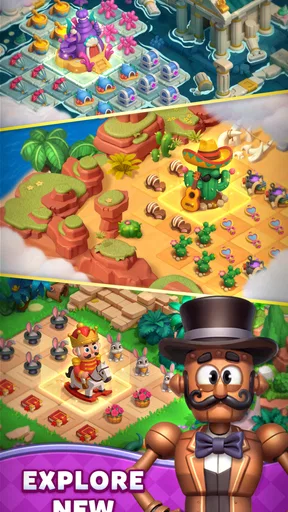
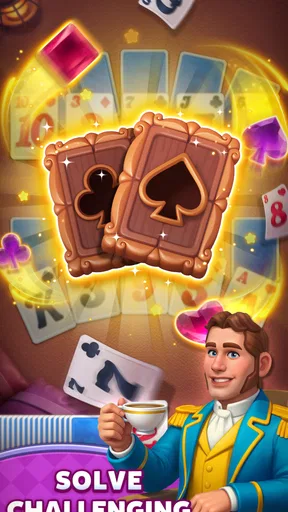
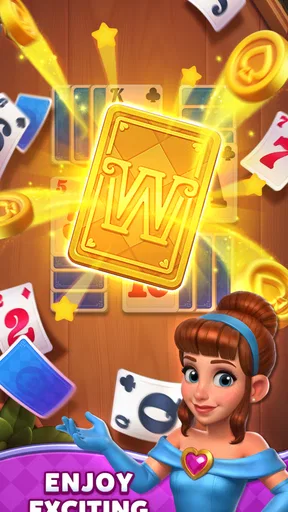
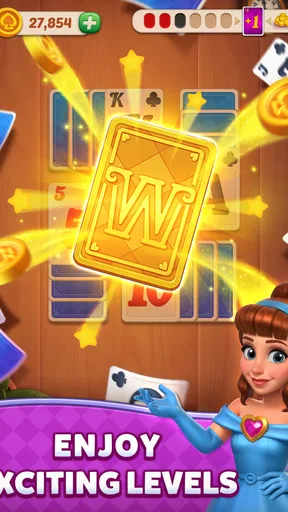
Our Review of Solitaire: Merge Kingdom
 Analysis by Appyee
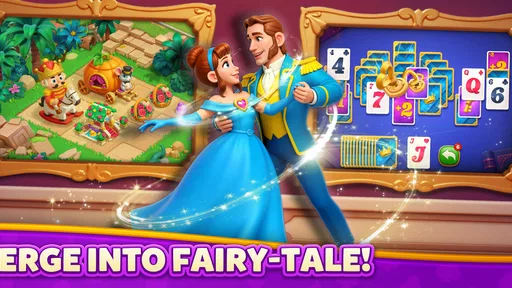
I picked up Solitaire: Merge Kingdom expecting a familiar card game, but its central idea is more interesting than a standard solitaire session. It combines Tripeaks-style solitaire with merge progression, so each round asks me to think about the next playable card while also considering how the wider kingdom develops. That combination gives the game a different rhythm from a traditional card app: I am not only clearing a layout, but also making choices that affect the longer session.
That makes it especially easy to share casually at home. One person can play a quick round while waiting for dinner, then hand the device to someone else without needing a complicated explanation. At the same time, it is important to understand what kind of shared experience this is. It feels like a game for taking turns on one device, not a built-in household management tool. I would recommend it to people who enjoy relaxed card puzzles and light progression, while warning dedicated solitaire players that the merge layer may feel less pure than classic cards.
How the solitaire and merge ideas work together
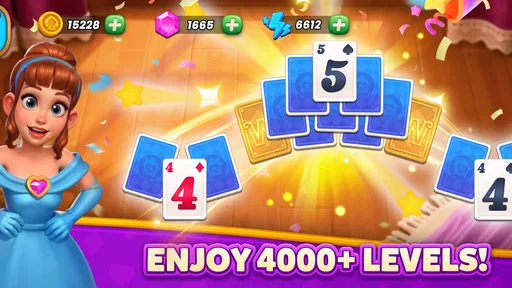
The card side is built around the familiar Tripeaks principle: I look for cards that can be removed in sequence, usually by selecting a value immediately above or below the current card. The appeal comes from spotting a route through the layout before the available moves disappear. That basic rule is easy to understand, but it still rewards attention because one careless choice can leave a useful card buried behind an awkward sequence.
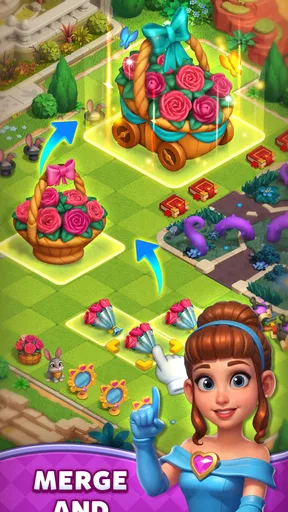
The merge element changes the reason for playing several rounds. Instead of treating every deal as an isolated puzzle, the game gives the session a broader sense of progress through its kingdom theme. I found that this makes ordinary card decisions feel more connected to a larger goal. A strong run is satisfying not only because I cleared cards efficiently, but because it contributes to the development side of the game.
This blend is the main reason to choose it over a plain solitaire app. Classic alternatives are usually better when I want a clean, uninterrupted card challenge with minimal decoration. Here, the extra layer creates more motivation between deals, but it also adds visual and strategic material that some players may consider a distraction. The right choice depends on whether I want solitaire as a quiet puzzle or as part of a longer game loop.
A practical way to approach each deal
My most useful habit was to pause before taking the obvious move. When several cards are available, I first check whether one choice exposes a new card or preserves a longer chain. A move that removes a card immediately is not always the best move if another option opens a blocked section of the layout. This is a small adjustment, but it makes the Tripeaks portion feel more deliberate.
I also try not to treat the merge progression as a reason to rush. The kingdom theme can make it tempting to focus only on visible progress, yet the card layout still determines whether a round succeeds. I get better results when I separate the two decisions: first solve the current card problem, then think about how the resulting progress fits into the broader session.
That workflow is one of the less obvious strengths of the game. It gives casual players a simple entry point while leaving room for better decision-making. Someone can tap through obvious combinations and enjoy the theme, but a more careful player can improve by planning around blocked cards, remaining options and the order in which the layout is opened.
What the game feels like during an ordinary day
I can imagine using it during a short break when I do not want to start a large adventure game. A single session has the familiar low-pressure appeal of solitaire, but the merge setting gives me a reason to return rather than closing the app as soon as one deal ends. It works well for that in-between moment when I want something interactive without committing to a long story or a demanding competitive match.
It also suits a shared household device in a simple, informal way. For example, I could play a round in the morning, leave the device available, and let another household member try later. The game is understandable enough that the next person can see the current state and decide whether to continue or begin another round. That kind of handoff is more natural here than in a game that depends heavily on one player’s private strategy or long-term character build.
There is a trade-off, though. If several people use the same device, the game’s progress can become difficult to interpret unless everyone agrees on how to take turns. The experience is not the same as separate profiles or a competitive pass-and-play mode. I would treat it as a shared casual activity, not as a system designed to keep each person’s progress perfectly separate.
Shared-device boundaries and household coordination
Before installing it on a family tablet, I would decide who is actually going to use the game and what “sharing” means in practice. The most straightforward arrangement is one person playing at a time, with everyone understanding that the visible progress belongs to the device’s current game state. That avoids confusion about who made a particular move or why the kingdom looks different from the last session.
If two people want independent progress, I would be cautious about assuming the game will provide separate spaces. The safest approach is to regard the displayed game as one shared play area unless the app itself clearly offers another arrangement. I would not ask a younger player to manage account boundaries or purchases without an adult checking the device setup first.
This matters because the game is free to download but includes in-app purchases ranging from $0.99 to $99.99 per item. That is a wide enough range to make household coordination worthwhile, especially when children use a shared phone or tablet. I would discuss purchasing rules before handing over the device, and I would keep the payment side under the adult’s control rather than treating the game as completely cost-free.
The free entry point is still useful. It lets me test whether the combination of solitaire and merging fits my habits before spending anything. I would play long enough to decide whether the progression genuinely improves the card experience or merely encourages me to keep returning. If I enjoy the basic rounds but dislike the extra layer, paying would not solve that mismatch.
Taking turns without losing the thread
For a household using one device, a simple turn routine works better than trying to coordinate every decision. One player can complete a deal, while the next player starts a fresh round or continues only if everyone agrees. Passing the device after every individual card would probably make the game feel slow and invite disagreements about the “right” move.
A better shared approach is to let each person own a complete short session. That preserves the puzzle’s flow and makes the merge progression easier to follow. I would also avoid changing the game immediately after someone has left a promising layout unfinished. The next player may not understand the intended plan, and the resulting frustration would come from the handoff rather than from the card challenge itself.
For adults sharing a device, this is mostly a convenience issue. For children, it becomes a trust issue: everyone should know whether the next player is allowed to spend resources, restart a deal or make a progression choice. The game can support a pleasant shared routine, but the routine comes from household agreement rather than from assuming the app will enforce it.
Age context and the role of adult supervision
The content rating is Everyone, which matches the gentle card-game presentation and makes the title broadly approachable. I would still distinguish between content suitability and purchasing readiness. A game can be appropriate for children to play while still requiring an adult to review how purchases are handled on the device.
For younger players, the rules are accessible because the solitaire foundation is recognizable and the basic card relationships are easy to explain. The merge progression may also give them a reason to practice planning instead of tapping randomly. I would introduce it as a game of choosing the best available sequence, not simply as a reward-driven activity.
For older adults who already enjoy solitaire, the familiar card structure may be more important than the kingdom theme. The game can be a comfortable bridge between a traditional card app and a more decorative puzzle game. However, anyone who prefers a completely uncluttered interface may find the progression layer less appealing than a dedicated Tripeaks or Klondike application.
I would also consider the player’s tolerance for repeated attempts. Tripeaks-style layouts can be relaxing, but they can also become irritating when a sequence depends on a card that is not available at the right moment. The merge setting softens that repetition by giving the wider session a sense of purpose, yet it does not remove the underlying uncertainty of card layouts.
Performance expectations and everyday usability
Solitaire: Merge Kingdom comes from FUNJOY and is available as a free game in the card category. Its current version is 1.4.4, and it supports devices running Android 7.0 or later. That makes it suitable for many older Android phones and tablets, although the actual comfort of play will still depend on screen size, responsiveness and how well the device handles the game’s visual presentation.
On a phone, the card layout is the priority. I prefer holding the device upright and keeping my attention on the available sequence rather than trying to play while doing something else. A larger tablet screen would be more comfortable for shared use because another person can watch the decision-making without leaning over the player’s shoulder, but the game’s basic appeal remains personal even when the device is larger.
The public response is positive but not overwhelming: the game has a 4.0 average from around 111 ratings, with roughly 24 written reviews and over 10K installs. I see that as a sign of an early, modest player base rather than proof that it will suit everyone. The numbers are useful context, but my decision would depend more on whether I enjoy the specific combination of card chains and merge progression.
Because it is a relatively focused game, I would not choose it for deep social competition, a large collection system or a highly developed story. Its value is in the short puzzle loop and the gradual feeling of building something around it. That focus is a strength when I want a calm diversion, but a weakness if I expect a broad strategy game with many distinct modes.
Where it beats familiar alternatives
Compared with ordinary solitaire, this game offers more continuity between rounds. A standard card app may give me excellent control over rules and layouts, but once a deal ends, the motivation often ends with it. Here, the merge kingdom supplies a reason to think beyond the current tableau. That is particularly useful for players who lose interest when every round feels disconnected.
Compared with merge-only games, the card decisions are more active. I am not simply combining matching objects in a predictable chain; I am searching for a legal route through a changing layout. The card layer gives the progression a moment-to-moment problem, which can make the broader development feel earned rather than automatic.
It is less suitable than a pure solitaire app for someone who wants a quiet, traditional ruleset with no surrounding theme. It is also less suitable than a competitive card game for someone who wants direct opponents, rankings or head-to-head tension. I would choose it for a middle ground: recognizable solitaire thinking with a light progression framework.
Limitations I noticed in the overall design
The combination that makes the game distinctive can also make it feel busy. Players who enjoy the discipline of a bare card layout may see the kingdom progression as an interruption between puzzles. I would not call that a flaw for everyone, but it is a clear reason to try the free version before deciding whether the full experience belongs on a primary device.
The shared-device angle has limits too. A household can take turns, but I would not confuse that with proper multi-user separation. If preserving individual progress matters, a dedicated personal device or a clearly agreed single-player routine is safer. This is especially important when one person is much more invested in the progression than the others.
Purchases are another point where expectations should stay realistic. Since the game is free but contains paid items, I would not hand it to a child on a payment-enabled device without checking the household’s purchase safeguards. The game’s Everyone rating answers the content question, not the budgeting question.
Finally, players looking for a guaranteed win every time may become impatient with the card element. The merge theme can encourage persistence, but it cannot turn every layout into a perfectly controllable puzzle. I enjoy that uncertainty in moderation; if I want complete control and no failed attempts, a more deterministic puzzle would be a better fit.
My household verdict
After spending time with it, I see Solitaire: Merge Kingdom as a good choice for casual players who want more than a bare solitaire board but less commitment than a large strategy game. The Tripeaks foundation is familiar enough for a new player to understand quickly, while the merge kingdom gives repeated rounds a sense of direction. That balance is its strongest idea.
For shared household use, I would recommend a clear arrangement: one player at a time, agreed turn lengths, and an adult handling purchase decisions. The Everyone rating makes the game approachable across ages, but it does not replace communication about whose progress is being changed or whether paid items are allowed. With those boundaries, it can work nicely as a relaxed pass-around game on a tablet or family phone.
I would skip it if my priority were a completely traditional solitaire experience, separate personal profiles or competitive multiplayer. I would also avoid treating the free download as a promise of a totally purchase-free experience. Those are not reasons to dismiss it; they simply define where another card app would serve me better.
For everyone else, the free starting point makes the decision easy. I would install it, play several rounds without spending, and pay attention to whether the merge progression improves my enjoyment of the card layouts. If I find myself planning sequences and looking forward to the next kingdom step, the game has done its job. Its best quality is the way it turns familiar solitaire decisions into part of a longer, shared-friendly routine.
Verdict
Strengths of Solitaire: Merge Kingdom
- Simple merge mechanics make it easy to learn within minutes.
- Short rounds work well for quick play sessions on mobile.
- Kingdom-building gives progression beyond the standard card game.
- Bright visuals and cheerful themes make the game feel inviting.
- Offline play may be convenient when a stable connection is unavailable.
Limitations of Solitaire: Merge Kingdom
- Progress can feel repetitive after mastering the core merge loop.
- Energy or waiting systems may interrupt longer play sessions.
- Some upgrades and rewards can require considerable grinding.
- Small card elements may be difficult to read on compact screens.
- Ads or optional purchases may affect the otherwise relaxed experience.
Other Releases by FUNJOY
View All
Similar Picks in This Category
View All
Solitaire - Classic Card Games
MobilityWare4.6

UNO!™
Mattel163 Limited4.3

Spider Solitaire: Card Games
MobilityWare4.6

Solitaire.com - Classic Cards
Tripledot Studios Limited4.7

Plants vs. Zombies™ Heroes
ELECTRONIC ARTS4.1

Hearthstone
Blizzard Entertainment, Inc.4.1
Frequently Asked Questions
What is Solitaire: Merge Kingdom, and how is the gameplay structured?
Solitaire: Merge Kingdom combines classic solitaire card challenges with a kingdom-building and merging system. You complete card levels to earn rewards, then use those rewards to unlock areas, restore buildings, and merge items that help develop your kingdom. The solitaire rules are generally familiar, but progress also depends on managing resources and completing objectives outside the card table.
Is Solitaire: Merge Kingdom free to download and play?
Solitaire: Merge Kingdom is typically available as a free download, allowing you to begin playing without an upfront purchase. However, the game may include optional in-app purchases for coins, boosters, extra moves, energy, or other conveniences. Progress can usually be made without paying, although waiting periods, limited resources, and difficult levels may encourage purchases.
Does Solitaire: Merge Kingdom require an internet connection?
An internet connection may be needed for certain features, including advertisements, in-app purchases, cloud synchronization, events, and updated game content. Some solitaire levels may work when you are offline, but availability can vary depending on the version and device. For the most reliable experience, especially when saving progress or claiming online rewards, it is best to connect to Wi-Fi or mobile data.
Are there advertisements or optional purchases in the game?
Yes, players should expect advertising and optional purchases in Solitaire: Merge Kingdom. Ads may appear between levels or be offered in exchange for extra coins, boosters, or additional chances. Purchases can speed up kingdom improvements or help overcome challenging card layouts, but they are not necessarily required. Parents should also review device purchase settings before allowing children to play.
Is Solitaire: Merge Kingdom suitable for casual players and beginners?
The game is generally suitable for casual players because its basic solitaire mechanics are easy to understand and the kingdom progression provides goals beyond simply finishing card layouts. Beginners can learn through introductory stages, while experienced solitaire fans may appreciate the extra objectives and collection elements. Still, later levels can become more demanding and may require careful use of boosters and resources.
Play our best games!


